
 Nada Lena Nasserdeen
Many leaders feel stuck. They have the best plans. They went to top schools. They work long hours. Yet, their teams are tired, and growth hits a wall. When things look great on paper but fail in real life, the problem is not the plan. The problem is the mind.
True executive coaching leadership focuses on how a person thinks, not just what they do. Most training teaches people new skills. It gives them tools for their tool belt. But if the person wearing the belt is stressed or trapped in old habits, those tools will not work. To grow your company, you have to grow yourself first.
The Two Sides of Every Leader: Doing Versus Being
To understand executive coaching leadership, you must look at the two sides of a leader. The first side is the "doing" side. This includes your knowledge, your degrees, and your technical skills. The second side is the "being" side. This is your character, your mindsets, and your emotional control.
+-------------------------------------------------------+
| THE TWO SIDES OF A LEADER |
+----------------------+--------------------------------+
| THE DOING SIDE | THE BEING SIDE |
+----------------------+--------------------------------+
| • Technical skills | • Mindsets & Beliefs |
| • Degrees & diplomas | • Emotional control |
| • Tools & strategies | • Character & psyche |
| • Short-term wins | • Long-term value creation |
+----------------------+--------------------------------+
Most business guides focus only on the doing side. They tell you how to track data or set goals. But research shows that soft skills make up most of your success. If you cannot manage your own stress, your tech skills will not save you. Your inner growth sets the ceiling for your entire team.
The Three Levels of Inner Leadership Growth
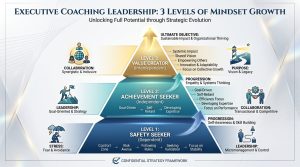
Scientists who study human growth found that adults operate at three different levels. These levels show how we handle stress and how we view our role in a group.
Level One: The Safety Seekers
This is the base level. About 64% of all adults stay here. At this stage, the body and mind care most about safety, comfort, and belonging. People at this level do not want to stand out. They prefer to follow orders. They say, "Tell me what to do, and I will do it, as long as I feel safe."
Level Two: The Achievement Seekers
This is where most leaders live. About 35% of regular adults reach this level, but 85% of managers operate here. At this stage, people shift from dependent thinking to independent thinking. They want to stand out, get ahead, and win. They care deeply about short-term results and personal status.
Level Two Pitfalls in Business
While Level Two leaders get things done, they often face major issues. A leader at this level might build a big company just to prove others wrong. This drive can lead to micromanagement. The leader wins awards, but the staff burns out. They stay only for the pay, not the culture. Strategic business coaching can help leaders move away from micromanagement toward true value creation.
Level Three: The Value Creators
Only 1% of people reach this final level. Here, leaders stop worrying about standing out or standing in. Instead, they care about creating value for others. They lift their people up and focus on a purpose bigger than themselves. They shift from independent thinking to interdependent thinking. Reach your full potential by choosing the right coaching and training for your leadership journey.
How to Begin Your Leadership Mindset Upgrade

The business world is full of choices and fast changes. When the confusion of the job is bigger than the inner strength of the manager, things break down. You cannot make the world less complex. You can only make yourself more capable.
[ LEVEL 3 ]
Interdependent
Value Creator
▲
|
[ LEVEL 2 ]
Independent
Achievement Seeker
▲
|
[ LEVEL 1 ]
Dependent
Safety Seeker
Improving your mind takes real effort. It is closely tied to your nervous system. If you have had bad experiences or high stress in your past, your body will naturally look for safety instead of growth. You must train your body and mind to feel secure so you can lead with clarity. Learn how our team helps leaders train their nervous systems for better clarity.
Simple Starter Strategies
You do not need a massive shift to start. Simple habits can help calm your nervous system and give you better control.
- Daily Stillness: Spend ten minutes in quiet thought or meditation each day to lower your stress.
- Journaling: Write down your thoughts to see your choices clearly.
- Gratitude Lists: Note three things that went well each day to train your mind to see the good.
Advanced Tools for Mindset Change Including Tests and Therapy
Once you have stable daily habits, you can look at the lenses you use to see the world. You can take online tests to see where your mind gets stuck. If you find deep blocks, professional help like therapy or special nerve feedback can help fix old patterns. This work lets you hold more responsibility without dropping the ball. You can take various assessments to identify where your leadership mindset is currently stuck.
Frequently Asked Questions About Executive Coaching and Mindset
What is executive coaching leadership?
It is a method that helps corporate heads develop both their hard business skills and their inner character. It teaches managers how to look at their own biases, control their stress, and build better relationships with their teams.
Why do smart managers get stuck?
Most managers get stuck because they rely only on strategy. They have the talent to do the job, but they lack the emotional maturity to handle high pressure. When stress hits, they fall back on micromanagement or fear.
How long does it take to change a leadership mindset?
Small changes can happen in a few weeks with daily journaling and breathing exercises. However, moving from a self-focused mindset to a team-focused mindset is a lifelong journey that requires constant practice.
Can a Level Two leader become a Level Three leader?
Yes. A leader can move up by learning to let go of personal praise. They must shift their focus from "How do I look?" to "How can I help my team win?" This requires healing the old fears that drive the need to constantly prove oneself.
How does stress affect my management style?
When you are under too much stress, your nervous system triggers a fight-or-flight response. This makes you view your team as a threat. You will likely stop listening, make fast choices without input, and hurt team morale.